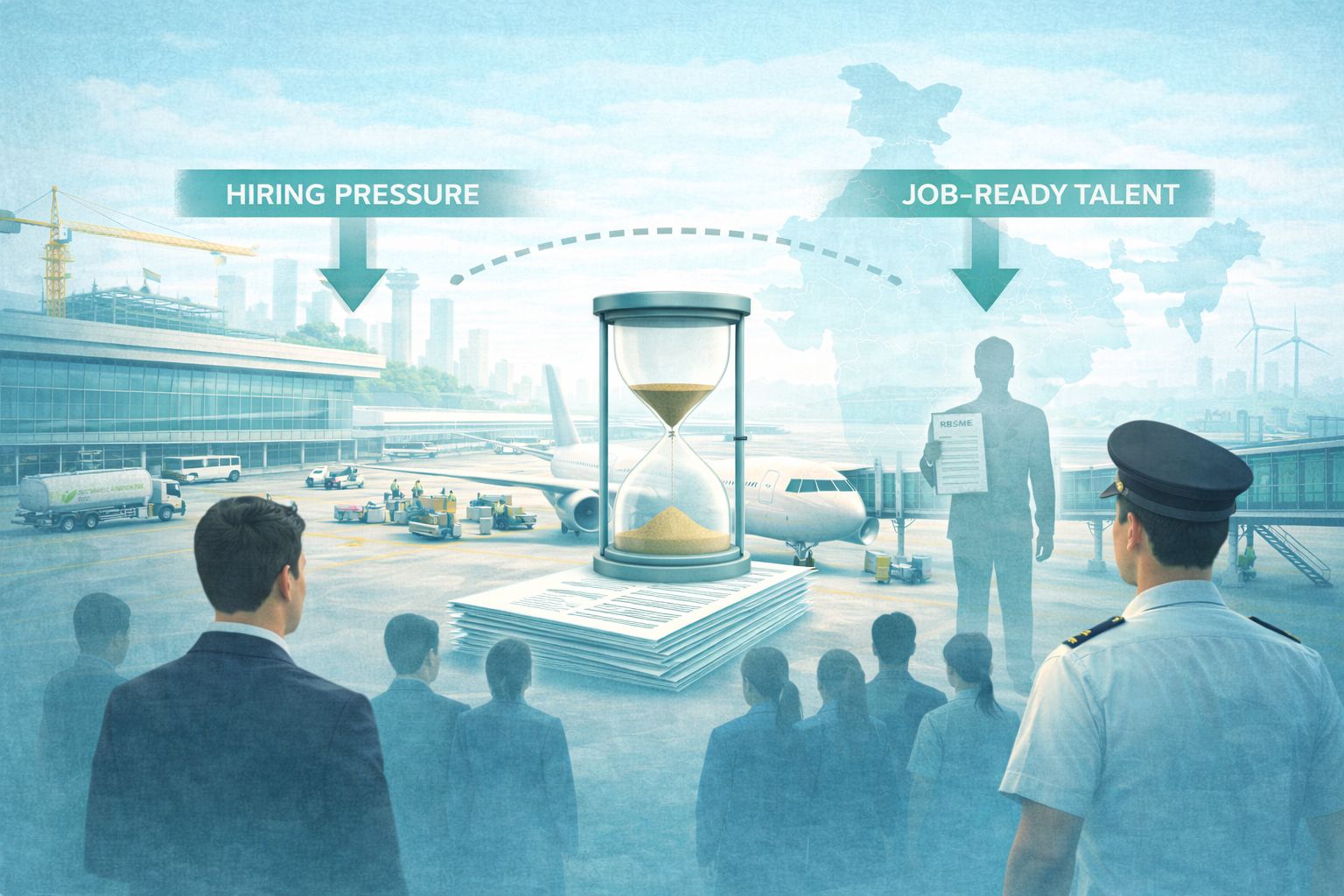

India’s aviation growth story is no longer limited to rising passenger numbers or new airline launches. One of the biggest shifts shaping the industry today is airport expansion — new terminals, greenfield airports, regional connectivity projects, and capacity upgrades across metros and Tier-2 cities.
But beyond infrastructure headlines, this expansion is creating something far more critical: sustained demand for aviation manpower.
As India moves deeper into 2026, airport development is directly influencing how, where, and whom the aviation industry hires. At Aviation Indeed, we see this shift clearly reflected in airport hiring trends across the country.
India’s Airport Expansion Is Accelerating
India currently has one of the fastest-growing airport development pipelines in the world. Under regional connectivity initiatives and long-term aviation planning, the country is witnessing:
- New greenfield airports in emerging cities
- Major terminal expansions at metro airports
- Increased private participation in airport operations
- Cargo, MRO, and ground handling infrastructure upgrades
This expansion is not seasonal or temporary. Airports are being built and expanded with 20–30 year operational horizons, which means hiring is not a one-time event — it is an ongoing requirement.
Infrastructure Growth Directly Drives Job Creation
Every airport expansion creates multiple layers of employment, not just during construction, but throughout its operational lifecycle.
Once a terminal becomes operational, demand rises for:
- Passenger handling and ground staff
- Airport operations and terminal management teams
- Security, safety, and compliance personnel
- Cargo, logistics, and warehouse staff
- Airline station managers and supervisors
- Maintenance, facility, and support roles
Unlike airline hiring, which can fluctuate with routes and fleet utilization, airport jobs are structurally stable. As long as the airport operates, manpower is required — 24/7.
Why Airport Hiring Is Different From Airline Hiring
Airport recruitment follows a very different pattern compared to airlines.
Airports deal with:
- High passenger volumes with fixed infrastructure
- Multi-vendor operations (airlines, ground handlers, security agencies, cargo operators)
- Shift-based, compliance-heavy roles
- Long-term staffing models rather than short contracts
This means airports prefer candidates who are operationally ready, adaptable, and trained for real-world environments — not just classroom-certified.
As airports expand, hiring pressure increases not just in numbers, but in the quality and reliability of manpower.
Regional Airports Are Creating New Aviation Talent Hubs
One of the most important changes driven by airport expansion is the geographic decentralization of aviation jobs.
Earlier, most aviation careers were concentrated in metro cities. Today, new and upgraded airports in Tier-2 and Tier-3 cities are creating local employment opportunities in aviation for the first time.
- Increased hiring of local ground staff and operations teams
- Reduced migration pressure toward metros
- Demand for regionally trained aviation professionals
- Growth of aviation training ecosystems around new airports
For job seekers, this means aviation careers are no longer limited to a few major cities — they are becoming more accessible across India.
Manpower Demand Is Outpacing Job-Ready Supply
Despite strong interest in aviation careers, airports face a consistent challenge: availability of job-ready talent.
- Candidates with certification but limited operational exposure
- High early attrition in ground handling and passenger service roles
- Skill gaps in safety culture, communication, and system usage
- Lack of awareness about airport-specific career paths
As airport infrastructure expands faster than training pipelines, recruitment teams are under pressure to hire smarter — not just faster.
What This Means for Aviation Job Seekers
For professionals and freshers, airport expansion creates real opportunity — but preparation matters.
The candidates who benefit most are those who:
- Understand airport operations beyond job titles
- Are comfortable with shift-based and high-pressure environments
- Build multi-skill capabilities (customer handling + systems + safety awareness)
- Stay visible to verified recruiters through platforms like Aviation Indeed Jobs
Airport jobs are no longer “entry-only” roles. They are evolving into structured career paths with growth into supervision, operations, and management.
What This Means for Employers and Recruiters
For airport operators and service partners, expansion brings hiring urgency — but also risk.
Successful hiring strategies in 2026 will focus on:
- Pre-assessed and trained talent pools
- Role-specific screening rather than generic resumes
- Lower attrition through better candidate-job alignment
- Partnerships with aviation-focused recruitment platforms like Aviation Indeed
Infrastructure can be built in months. Building a stable, compliant workforce takes planning.
The Bigger Picture
Airport expansion in India is reshaping aviation employment at every level — from entry roles to leadership positions.
This is not a short-term hiring surge. It is a structural shift in how aviation manpower will be built, deployed, and retained over the next decade.
Those who understand this shift early — job seekers and employers alike — will be best positioned to grow with the industry, rather than struggle to keep up.