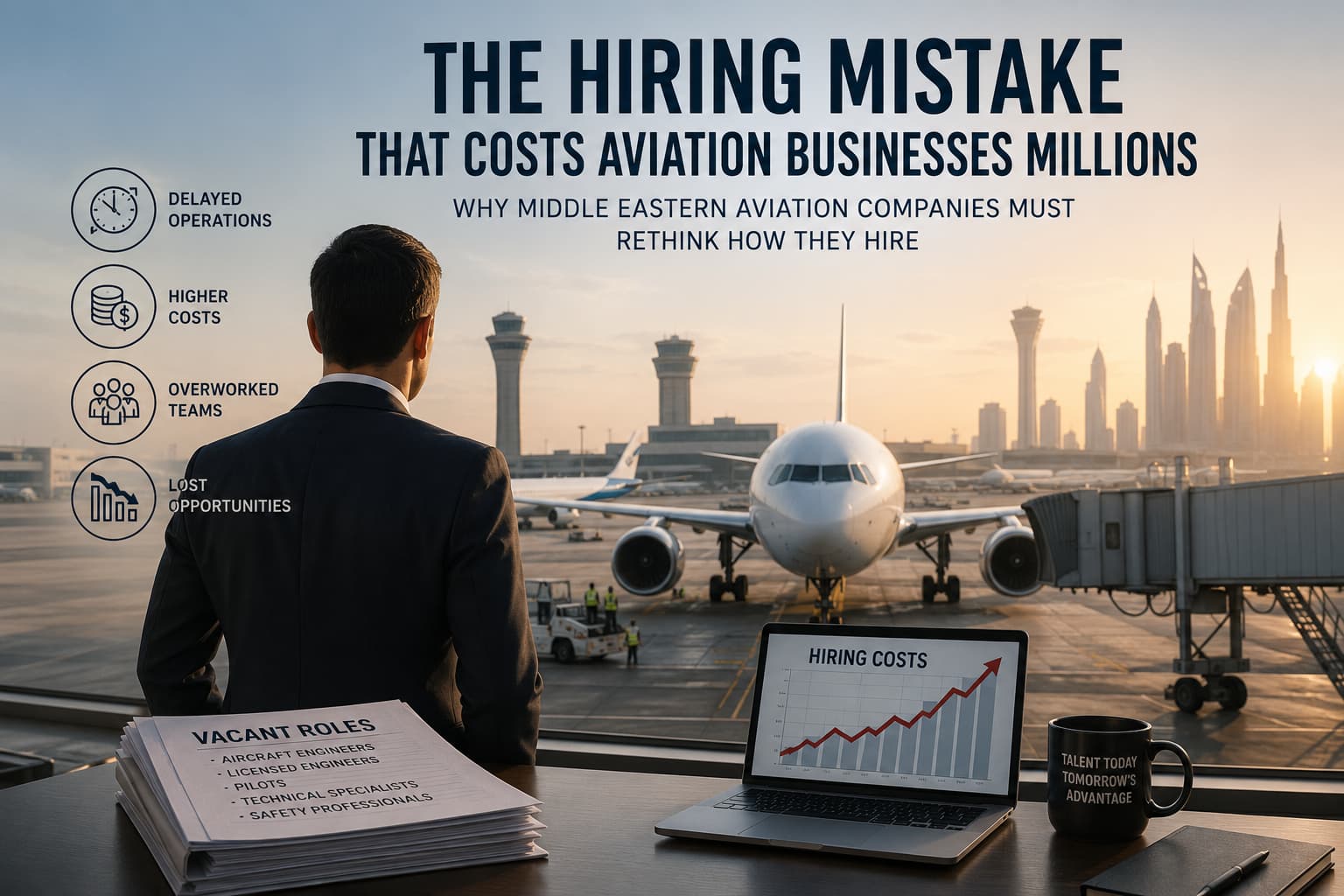
Across the aviation industry, one concern is becoming increasingly common in 2026: critical roles are taking longer to fill.
From pilots and engineers to ground operations and safety teams, hiring timelines have stretched noticeably compared to pre-pandemic years. For airlines and airports operating in a time-sensitive environment, this is more than an HR inconvenience — it is an operational risk.
Understanding what is driving the aviation time-to-hire slowdown is the first step toward fixing it.
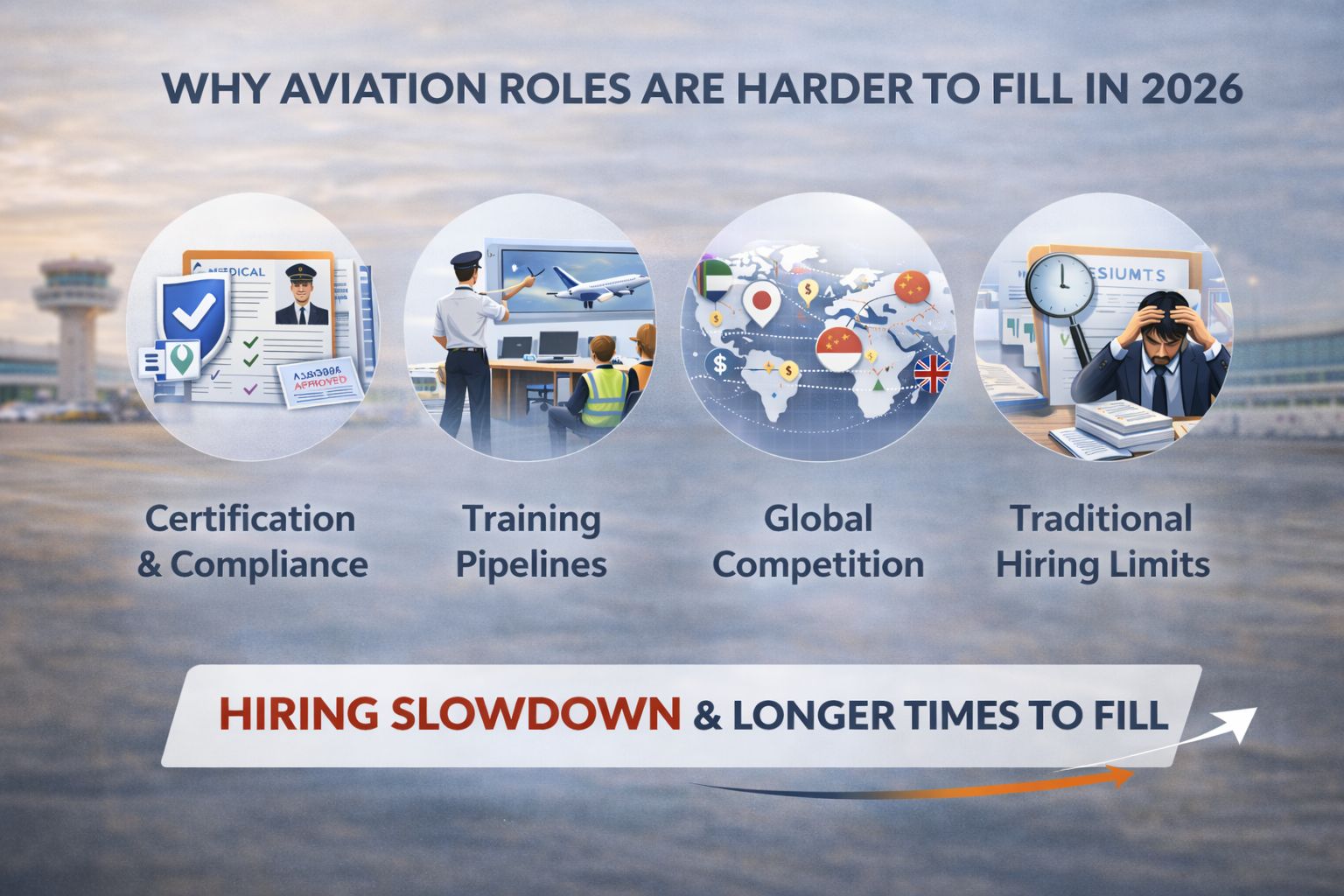
Why Aviation Roles Are Harder to Fill in 2026
Several overlapping factors are driving this hiring slowdown.
1. Certification and Compliance Layers
Unlike many industries, aviation hiring cannot move forward on intent alone. Candidates must clear multiple checkpoints, including:
- License validation
- Medical fitness
- Background verification
- Regulatory eligibility
- Type ratings (for technical roles)
Each layer adds time — and any mismatch can restart the process. This compliance-heavy structure is essential for safety, but it also means aviation hiring cannot be rushed without risk.
2. Training Pipelines Are Still Catching Up
During the pandemic years, many training pipelines slowed or paused. While demand has returned strongly, the supply of fully trained professionals has not yet fully recovered.
In particular, the industry is seeing pressure in:
- Type-rated pilots
- Licensed aircraft maintenance engineers
- Experienced ground operations staff
- Safety and compliance specialists
Because aviation skills take years to develop, the market cannot correct overnight.
3. Experience Matters More Than Ever
In 2026, employers are becoming more cautious about operational readiness. Many organisations now prioritise candidates who can contribute quickly in live environments.
Instead of simply meeting minimum qualifications, candidates are increasingly expected to demonstrate:
- Real operational exposure
- Multi-system familiarity
- Procedural discipline
- Shift-readiness
- Safety mindset
While this improves workforce quality, it naturally narrows the available talent pool.
4. Global Competition for the Same Talent
Cross-border demand is intensifying the hiring challenge. Airlines in the Middle East, Asia-Pacific, and parts of Europe are often competing for overlapping talent pools — especially for pilots, engineers, and experienced airport professionals.
This creates:
- Offer competition
- Salary inflation in key roles
- Higher candidate drop-off
- Longer negotiation cycles
In many cases, candidates now evaluate multiple international options before accepting offers, which further extends hiring timelines.
5. Traditional Hiring Models Are Showing Their Limits
Many aviation organisations still rely on recruitment workflows designed for more stable hiring periods.
Common bottlenecks include:
- Reactive sourcing instead of pipeline building
- Generic screening methods
- Delayed stakeholder coordination
- Limited pre-assessed talent pools
As workforce pressure increases, these legacy processes struggle to keep pace. This is why many organisations are strengthening their approach through more structured frameworks such as dedicated aviation hiring solutions.
The Operational Impact of Longer Hiring Cycles
When time-to-hire stretches in aviation, the consequences extend beyond HR metrics.
Organisations may experience:
- Delayed route or fleet expansion
- Increased overtime costs
- Training pipeline congestion
- Service inconsistency
- Higher workload on existing teams
Over time, prolonged vacancies can also affect safety culture and employee morale — two areas aviation operators monitor closely.
How Leading Aviation Employers Are Responding
Forward-looking airlines and airports are not waiting for the market to fix itself. Many are already adapting their hiring strategy.
Common shifts include:
- Building pre-qualified talent pipelines
- Improving early-stage screening accuracy
- Aligning recruitment with training capacity
- Forecasting workforce demand earlier
- Partnering with aviation-specialist recruiters
The focus is moving from reactive hiring to predictive workforce planning.
What Aviation HR Teams Should Prioritise Now
For organisations looking to reduce time-to-hire in 2026 and beyond, several priorities are becoming clear:
- Strengthen role-specific screening
- Maintain warm talent pools
- Improve cross-functional hiring coordination
- Monitor offer drop-off patterns
- Plan workforce needs earlier in the cycle
Even small improvements at each stage can significantly reduce overall hiring timelines.
Final Thoughts
The aviation time-to-hire challenge is not a short-term disruption. It reflects deeper shifts in workforce supply, regulatory complexity, and global competition for skilled professionals.
Organisations that continue relying on purely reactive hiring models will likely feel increasing pressure as demand grows.
Those that invest in structured, aviation-aware recruitment strategies today will be far better positioned to maintain operational continuity tomorrow.
For HR leaders and aviation operators tracking workforce trends, staying connected to real-time hiring insights through Aviation Indeed’s HR insights hub can help turn hiring pressure into a more predictable, manageable process.