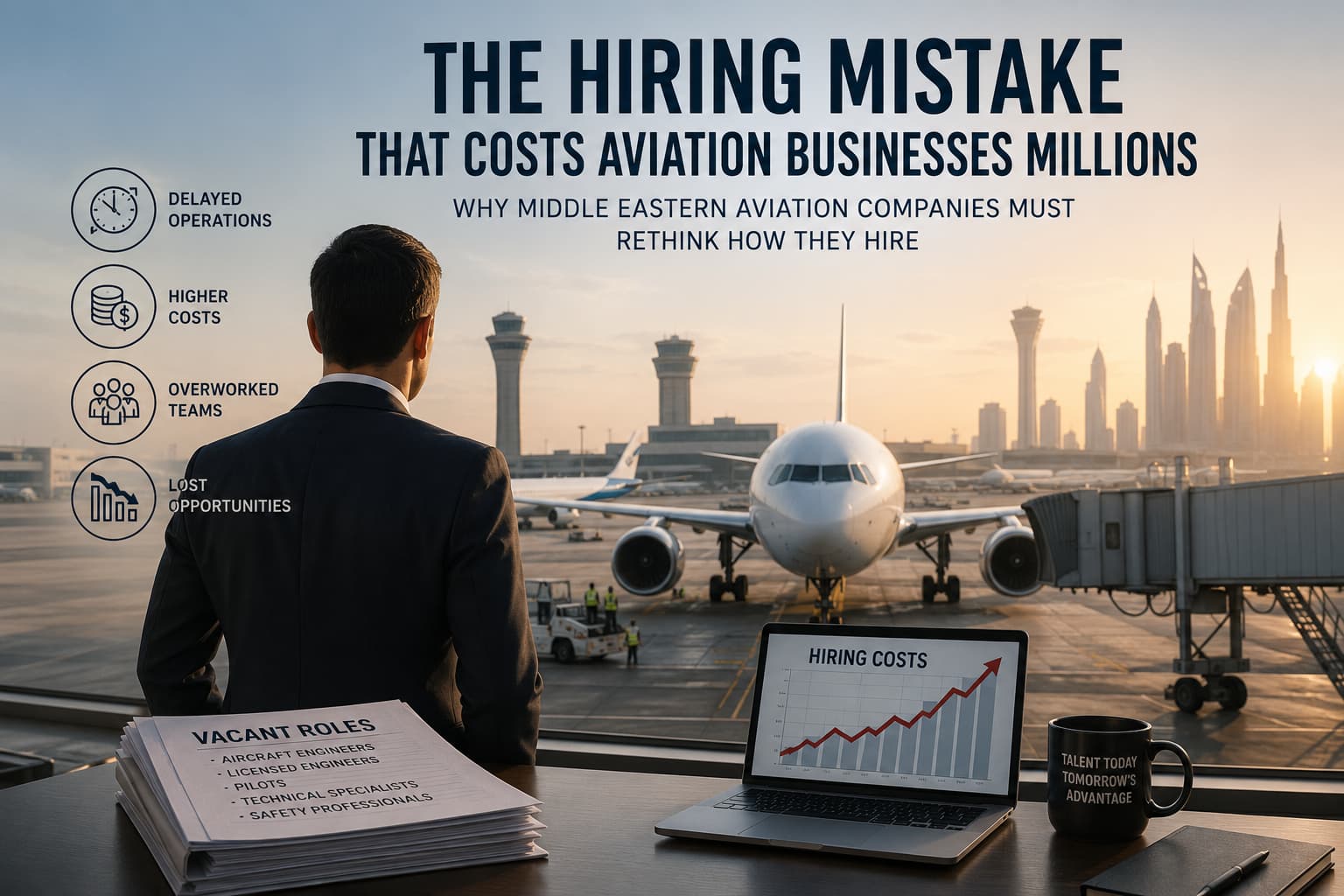
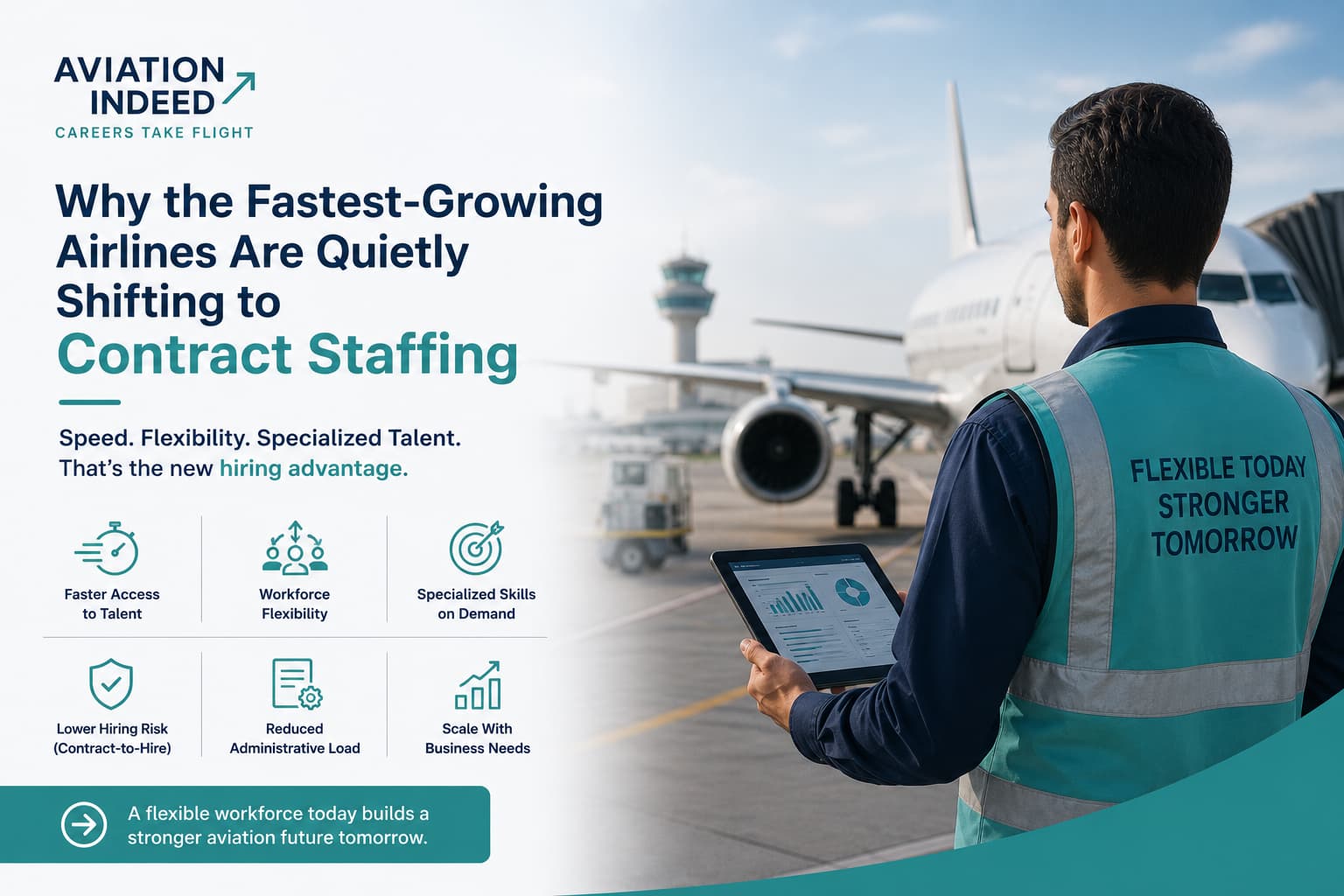
The aviation industry is growing rapidly — but hiring models are changing just as fast.
Across airlines, airports, MROs, and aviation support companies, more employers are quietly shifting toward contract staffing and flexible workforce models.
This shift is not happening because companies want to avoid long-term hiring.
It is happening because aviation businesses today need speed, flexibility, and access to specialized talent in a highly dynamic operating environment.
At Aviation Indeed, we are seeing increasing demand from aviation employers looking for staffing solutions that allow them to scale operations quickly without slowing down business momentum.
Why Contract Staffing Is Becoming More Important
Traditional hiring cycles often take time.
But aviation operations rarely slow down while recruitment processes are running.
Airlines and aviation companies frequently deal with:
- Seasonal passenger demand spikes
- Fleet expansion projects
- Aircraft maintenance cycles
- Operational scaling across locations
- Urgent manpower shortages
- Short-term technical requirements
In many of these situations, employers cannot wait months to fully complete permanent hiring cycles before operations are impacted.
This is where contractual hiring becomes highly valuable.
Contract Staffing Gives Aviation Employers Operational Flexibility
One of the biggest advantages of contract staffing is workforce flexibility.
Instead of committing immediately to large permanent headcounts, companies can scale manpower based on operational demand and project requirements.
This allows aviation businesses to remain agile while maintaining operational continuity.
For example, aviation employers may require additional workforce support during:
- Airport expansion periods
- Heavy maintenance projects
- Seasonal travel peaks
- Fleet induction programs
- Short-duration operational deployments
Contract staffing allows companies to respond faster without creating unnecessary long-term workforce pressure.
Speed Has Become a Competitive Advantage in Aviation Hiring
In fast-moving industries like aviation, delayed hiring often creates operational bottlenecks.
Whether it is technical manpower, ground operations staff, compliance professionals, or support teams, companies increasingly need access to talent with shorter turnaround times.
One of the major benefits of contractual hiring is the ability to mobilize skilled professionals quickly for immediate business needs.
At Aviation Indeed, we help aviation companies reduce hiring timelines by connecting employers with pre-screened aviation and technical professionals who are ready for project-based or operational deployment.
Specialised Aviation Roles Often Require Flexible Hiring Models
Many aviation roles require niche technical expertise that is not always easy to source through traditional hiring pipelines.
This is especially relevant for:
- Aircraft Maintenance Engineers (AMEs)
- B1/B2 Licensed Engineers
- MRO technical specialists
- Compliance and safety professionals
- Ground operations and support roles
- Project-specific aviation assignments
In these cases, employers are often focused more on immediate skill availability and operational readiness than on long-term hiring structures.
Contract staffing provides companies with faster access to these specialized skill sets when operational urgency is high.
Contract-to-Hire Models Are Reducing Hiring Risk
Another reason aviation companies are adopting flexible staffing strategies is risk management.
Many employers now prefer contract-to-hire models because they allow real-world evaluation before moving a professional onto permanent payroll.
This gives companies the opportunity to assess:
- Performance under operational conditions
- Reliability and adaptability
- Team and culture fit
- Technical and communication capability
For employers operating in uncertain market conditions or evolving business environments, this approach creates additional hiring flexibility while reducing long-term risk.
Lower Administrative Burden for Internal Teams
Managing aviation recruitment internally at scale can place heavy pressure on HR and operations teams.
Contract staffing models often reduce administrative workload by streamlining sourcing, screening, coordination, and workforce management processes.
This allows internal teams to stay focused on operations while staffing support is managed through a more structured and responsive hiring process.
For aviation companies dealing with rapid expansion or multiple operational priorities, this efficiency becomes extremely valuable.
Where Contract Staffing Creates the Most Value
Flexible aviation staffing models are especially useful in situations such as:
- Peak seasonal workforce requirements
- Aircraft maintenance projects
- Temporary operational deployments
- Rapid expansion phases
- Contract-to-hire workforce evaluation
- Access to difficult-to-source specialists
In many cases, companies are no longer viewing contract staffing as a short-term emergency solution.
It is increasingly becoming a planned workforce strategy.
Why This Hiring Model Will Continue Growing
Across industries, businesses are becoming more careful about balancing workforce cost, operational agility, and hiring speed.
The aviation industry is no different.
As airlines and aviation companies continue expanding, workforce flexibility is becoming a strategic advantage rather than just an HR preference.
Companies that can scale talent efficiently — without slowing operations — will be better positioned to respond to market changes, passenger demand, and operational growth.
How Aviation Indeed Supports Flexible Aviation Hiring
At Aviation Indeed, we help aviation employers build faster, more flexible, and operationally aligned staffing solutions.
Our contractual hiring support focuses on:
- Faster access to aviation talent
- Flexible workforce solutions
- Project-based staffing support
- Contract-to-hire hiring models
- Specialized aviation and technical roles
- Reduced hiring delays during operational scaling
The goal is not simply to fill vacancies.
It is to help aviation businesses create workforce structures that remain efficient, scalable, and responsive as the industry continues evolving.
You can explore aviation hiring solutions and industry opportunities through Aviation Indeed Jobs.