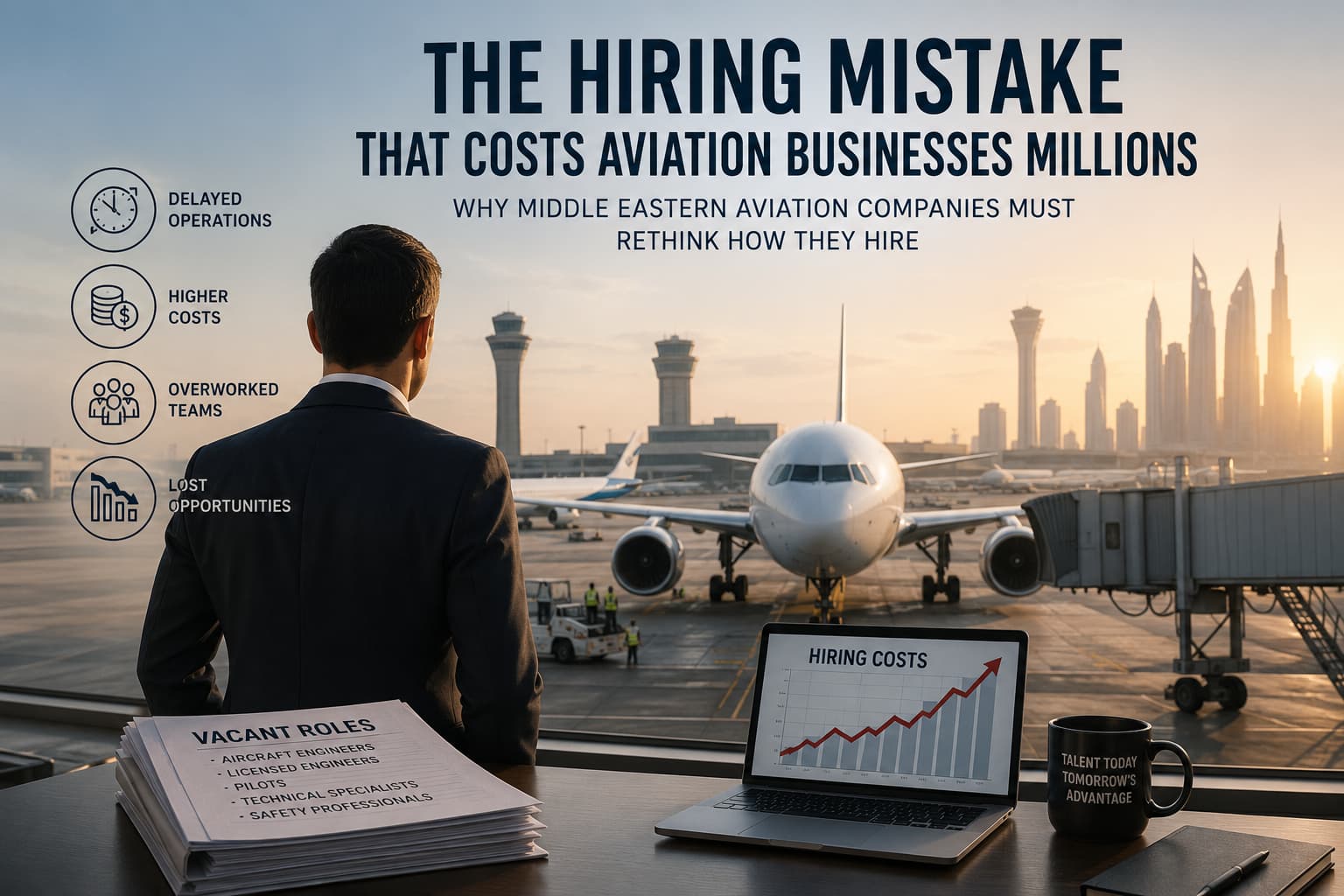
The aviation industry does not hire like other industries — yet many organizations still try to recruit as if it does.
On paper, aviation hiring may look similar to any large-scale workforce requirement: post a job, shortlist resumes, conduct interviews, and onboard candidates. In reality, this approach is one of the biggest reasons airlines, airports, and MROs struggle with delays, attrition, and skill mismatches.
Traditional hiring models were built for general corporate roles. Aviation operates under a completely different set of constraints — regulatory, operational, and safety-driven — and when those realities are ignored, recruitment breaks down.
Aviation Hiring Is Not Generic Hiring
Aviation is one of the few industries where:
- Safety is non-negotiable
- Regulations override speed
- Experience matters more than titles
- One wrong hire can impact operations, compliance, and reputation
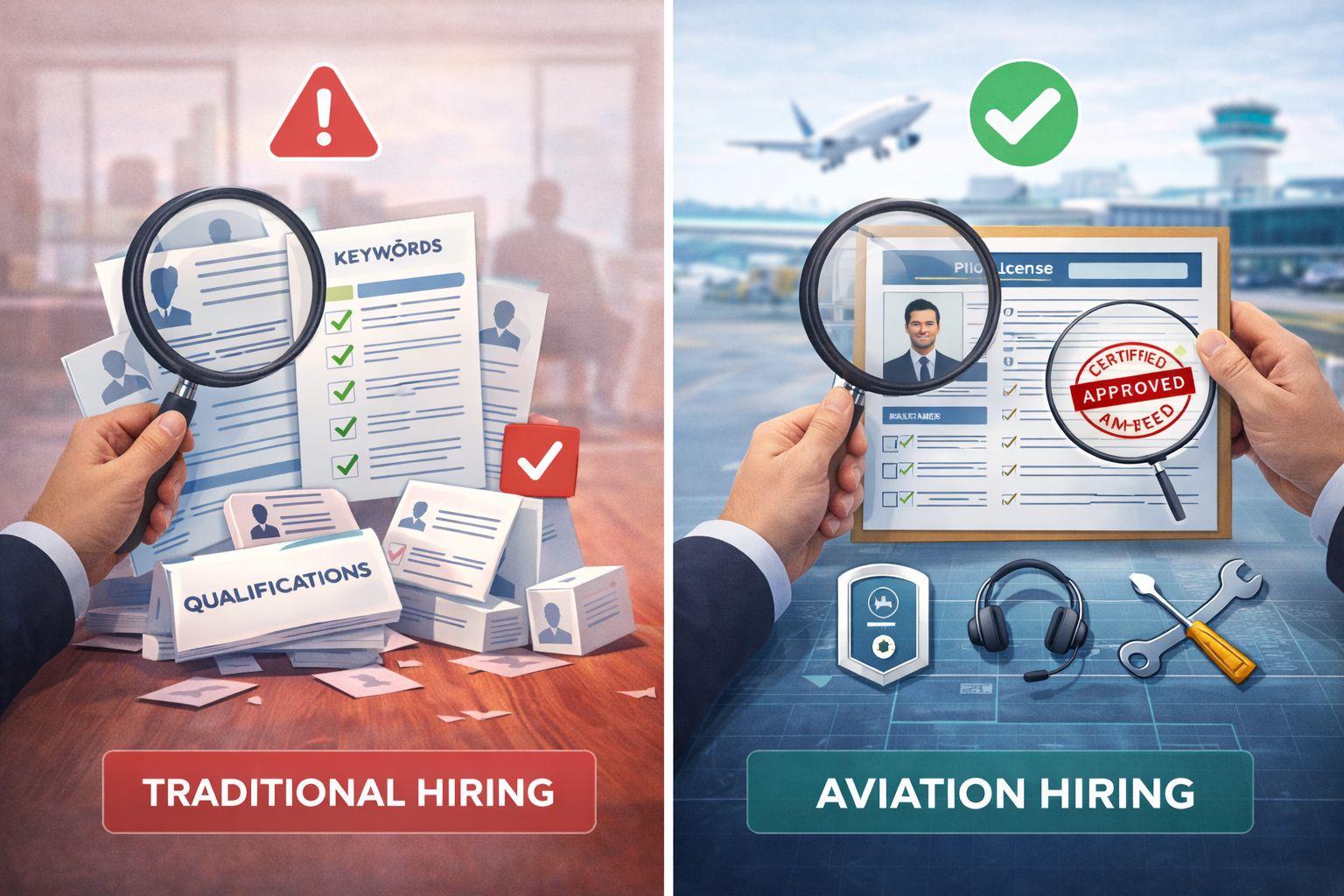
Yet traditional recruiters often rely on surface-level screening: keywords, degrees, and years of experience. That may work in sales or IT — it fails badly in aviation.
A resume alone does not tell you if a candidate can:
- Perform under operational pressure
- Follow strict safety protocols consistently
- Communicate clearly in high-stakes environments
- Integrate smoothly into regulated, shift-based operations
Without understanding these realities, hiring decisions become guesswork.
The Resume Problem: Why “Qualified” Often Means “Unprepared”
One of the most common issues aviation employers face is this:
Candidates look qualified on paper but fail on the floor.
Traditional recruiters often shortlist based on:
- Certifications without operational context
- Generic aviation keywords
- Inflated or unclear experience descriptions
What gets missed is operational readiness.
For example:
- A ground staff candidate may have training but no exposure to peak-hour passenger handling
- A cabin crew applicant may understand service protocols but struggle with situational judgment
- A maintenance technician may hold certification but lack familiarity with specific fleet environments
Aviation does not reward theoretical readiness. It rewards real-world competence — something traditional hiring methods rarely measure.
Why Generic Recruiters Struggle in Aviation
Most generic recruiters are trained to move fast. Aviation requires them to move accurately.
Lack of Industry Context
Recruiters unfamiliar with aviation often do not understand:
- Regulatory constraints and audits
- Role-specific risk exposure
- The difference between airline, airport, and MRO hiring
Misaligned Screening
Generic interviews assess confidence and communication. Aviation hiring must also assess:
- Safety mindset
- Procedural discipline
- Decision-making under pressure
Volume Over Precision
Traditional recruitment often prioritizes filling roles quickly. In aviation, speed without precision leads to:
- High early-stage attrition
- Increased training and re-hiring costs
- Compliance and safety risks
This is why many aviation HR teams feel trapped in a cycle of rehiring the same roles repeatedly.
Aviation Hiring Is a System, Not a Transaction
One of the biggest misconceptions is treating aviation hiring as a one-time transaction.
In reality, it is a system that must account for:
- Training lead times
- Certification validity
- Attrition patterns
- Seasonal operational pressure
- Regulatory audits
Generic recruiters typically focus on closing positions. Aviation-focused hiring focuses on sustaining operations.
That difference defines success or failure.
The Cost of Getting Aviation Hiring Wrong
When traditional hiring fails in aviation, the impact goes far beyond HR metrics.
It affects:
- Operational continuity
- Safety culture
- Customer experience
- Employer brand
- Long-term workforce stability
Replacing a mis-hire in aviation costs significantly more than hiring correctly the first time — not just financially, but operationally.
Why Aviation-Specific Recruitment Works Better
Specialized aviation recruitment partners operate differently.
They:
- Understand role-level realities, not just job titles
- Screen for operational readiness, not just resumes
- Build talent pipelines instead of reactive shortlists
- Align hiring with training, compliance, and retention
This approach reduces attrition, shortens onboarding curves, and improves long-term workforce quality.
It also aligns hiring decisions with how aviation actually functions — not how generic recruitment frameworks describe it.
The Shift Aviation HR Teams Are Making
Across airlines, airports, and MROs, hiring leaders are moving away from traditional models toward:
- Pre-assessed talent pools
- Role-specific evaluations
- Industry-aligned recruitment partners
- Data-backed workforce planning
This shift is not about outsourcing responsibility — it is about partnering with experts who understand aviation from the inside.
Final Thought
Aviation does not fail because talent is unavailable. It fails when hiring is approached without industry understanding.
Traditional hiring models were never designed for aviation’s complexity, compliance, and operational intensity. As the industry grows and pressures increase, relying on generic recruitment will only widen the gap between demand and readiness.
Organizations that adapt early will not just fill roles faster — they will build safer, stronger, and more resilient aviation teams.
Learn more about aviation-specific hiring approaches and workforce insights at Aviation Indeed’s recruitment solutions and explore how the industry is evolving in our aviation insights and HR knowledge hub.