
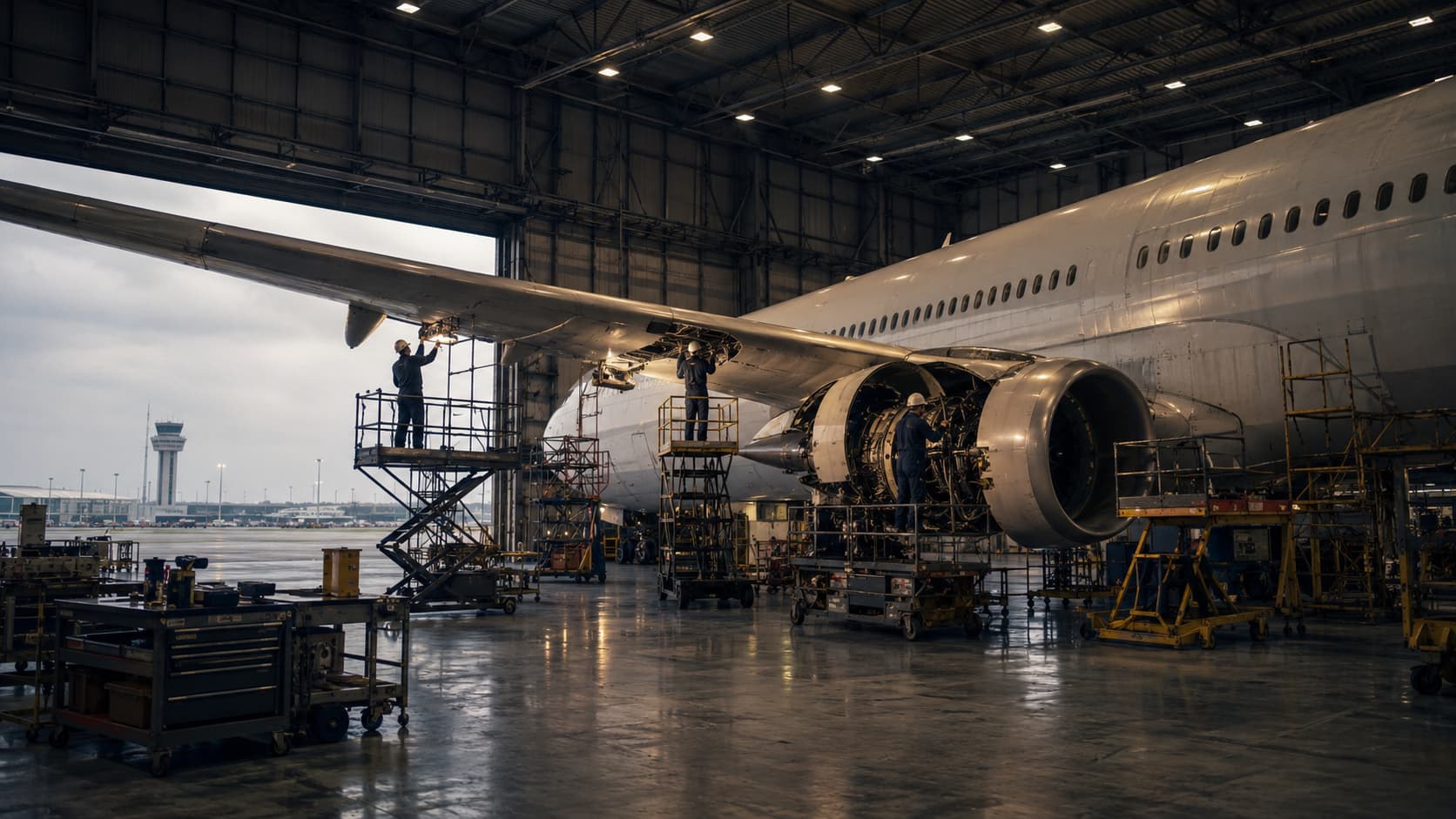
Every airline executive tracks aircraft deliveries. Every maintenance leader tracks fleet availability. Every HR team tracks hiring requirements.
Yet one of the biggest threats to aviation growth is not aircraft availability, spare parts, or maintenance costs. It is the growing shortage of CAT A Aircraft Maintenance Engineers (AMEs).
As airlines expand fleets, increase frequencies, open new bases, and improve aircraft utilization, the demand for qualified maintenance personnel continues to rise. Unfortunately, the supply of licensed and experienced CAT A engineers is not keeping pace.
Today, airlines, MROs, leasing companies, OEMs, and aviation service providers across Europe, the Middle East, Asia-Pacific, Africa, and North America are competing for the same limited talent pool. The result: longer hiring cycles, increased salary pressure, higher attrition, delayed expansion plans, and operational workforce risks.
The question is no longer whether there is a shortage. The question is how organizations will respond to it.
According to Boeing's latest Pilot and Technician Outlook, the global aviation industry will require approximately 710,000 new maintenance technicians by 2044, with nearly two-thirds of demand being driven by workforce replacement rather than fleet growth alone.
What Is a CAT A Aircraft Maintenance Engineer?
A CAT A Aircraft Maintenance Engineer is a licensed maintenance professional authorized to certify specific maintenance tasks and simple defect rectifications on commercial aircraft.
CAT A engineers are responsible for supporting:
- Aircraft transit checks
- Daily inspections
- Aircraft turnaround maintenance
- Defect rectification
- Operational dispatch support
- Release-to-service activities within certification privileges
Simply put: a flight cannot depart safely without maintenance professionals ensuring the aircraft is airworthy. CAT A engineers sit at the frontline of this responsibility.
Why Is There a Global Shortage of CAT A Engineers?
1. Fleet Growth Is Outpacing Workforce Growth
Commercial aviation continues to grow across nearly every major market. More aircraft mean more maintenance events, more line stations, more inspections, more release personnel, and more maintenance support teams.
However, engineer development takes years, while aircraft can be delivered within months. This imbalance is creating workforce pressure globally.
2. The Retirement Wave Has Arrived
One of the biggest contributors to technician demand is workforce attrition. Boeing estimates that approximately two-thirds of future personnel demand will come from replacing existing workers rather than supporting fleet growth. The industry is losing experienced maintenance professionals faster than new engineers are entering the workforce.
3. Everyone Wants Experienced Engineers
Most hiring managers seek Airbus A320 Family experience, Boeing 737 NG experience, Boeing 737 MAX experience, base maintenance exposure, line maintenance experience, and existing authorization holders.
Unfortunately, when every company wants experienced engineers, very few are investing in creating them. The industry cannot recruit its way out of a talent shortage. It must develop talent.
4. Global Talent Migration
The aviation maintenance workforce is highly mobile. Engineers naturally move toward better compensation, better career opportunities, better training exposure, and larger operators. As a result, developing aviation markets frequently lose experienced engineers to established aviation hubs — a dynamic also shaping why AME hiring in the Gulf routinely takes 60 to 90 days.
5. MRO Growth Is Increasing Competition
The global MRO industry has fully recovered and continues growing rapidly. Labor shortages remain one of the most frequently cited concerns among aviation maintenance leaders worldwide. MRO executives continue identifying workforce availability as one of the industry's biggest operational risks.
Global CAT A Demand vs Supply Outlook
While no regulator publishes CAT A-specific global statistics, aviation workforce forecasts provide a clear indication of future pressure points.
| Region | New Maintenance Technicians Required (2044) | Supply Situation | CAT A Hiring Difficulty |
|---|---|---|---|
| Eurasia | 165,000 | Aging workforce | Very High |
| China | 131,000 | Rapid fleet expansion | Very High |
| North America | 123,000 | Retirement pressure | High |
| Southeast Asia | 78,000 | Fast-growing market | Critical |
| Middle East | 63,000 | Reliance on expatriate workforce | Very High |
| South Asia | 45,000 | Strong training output but migration pressure | High |
| Latin America | 42,000 | Developing pipeline | Moderate-High |
| Northeast Asia | 27,000 | Growing demand | High |
| Africa | 24,000 | Training infrastructure gap | Critical |
| Oceania | 12,000 | Limited workforce pool | High |
Source: Boeing Pilot and Technician Outlook.
Which Regions Have the Highest Demand for CAT A Engineers?
Current demand is strongest across:
- Middle East — UAE, Saudi Arabia, Qatar, Oman
- Europe — Germany, Ireland, United Kingdom, Netherlands, Malta
- Asia-Pacific — Singapore, India, Malaysia, Indonesia, Thailand
- North America — United States, Canada
These markets continue competing aggressively for licensed maintenance talent.
Why This Matters to Airlines
When airlines cannot recruit enough engineers, several operational challenges emerge:
Aircraft ground time increases. Insufficient manpower can delay maintenance activities and reduce aircraft availability.
Expansion plans slow down. Adding aircraft without adding engineers creates operational bottlenecks.
Maintenance costs rise. Labor scarcity increases hiring costs, contractor dependency, and overtime expenses.
Compliance risks increase. Workforce shortages place additional pressure on existing teams.
For maintenance leaders, this is not merely an HR issue. It is an operational issue.
How Smart Airlines and MROs Are Solving the CAT A Shortage
The most successful organizations have stopped relying exclusively on recruitment. Instead, they are building talent pipelines.
Strategy 1: Build Talent Instead of Buying Talent
Leading operators are investing in graduate AME programs, technician development pathways, apprenticeship programs, internal CAT A academies, and structured licensing support. The best organizations understand that future engineers must be developed, not simply hired.
Strategy 2: Partner With Aviation Schools
Forward-thinking airlines and MROs actively engage with Aircraft Maintenance Engineering institutes, Part-147 training organizations, technical universities, and aviation academies. This creates a sustainable talent pipeline.
Strategy 3: Invest in AI-Enabled Training
Modern aviation training is evolving rapidly. Industry leaders are investing in virtual reality maintenance training, mixed reality learning environments, competency-based assessments, AI-powered learning systems, and digital maintenance simulations. Boeing identifies advanced digital learning and competency-based training as critical workforce development tools for addressing future technician shortages.
Strategy 4: Focus on Retention
The cheapest engineer to hire is often the one you already employ. Successful organizations invest heavily in career progression, leadership development, type-rating opportunities, training programs, and workplace culture. Retention is becoming a competitive advantage.
Frequently Asked Questions About CAT A Engineer Recruitment
How long does it take to develop a CAT A engineer?
Typically between 2 and 5 years depending on regulatory requirements, practical experience, aircraft exposure, and company authorization processes.
Why are airlines struggling to hire CAT A engineers?
Because demand is growing faster than workforce development, while retirements and global migration continue reducing available talent pools.
What is the difference between CAT A and B1 engineers?
CAT A engineers certify specific maintenance tasks and defect rectifications, while B1 engineers possess broader certification privileges covering aircraft systems and maintenance activities.
Which aircraft types currently drive the highest demand?
The highest hiring demand globally remains concentrated around the Airbus A320 Family, Boeing 737 NG, Boeing 737 MAX, Airbus A330, and Boeing 787.
Can AI solve the engineer shortage?
AI can improve training efficiency, maintenance planning, predictive maintenance, and knowledge transfer. However, AI cannot replace licensed maintenance personnel. The industry still requires qualified engineers to inspect, maintain, certify, and release aircraft.
Recommendations for Maintenance Heads, HR Leaders, and CEOs
Organizations navigating this shortage should focus on five priorities:
- Treat workforce planning like fleet planning. Engineering manpower should be forecasted years in advance.
- Build talent pipelines before vacancies exist. The best hiring strategy starts before positions open — see why UAE aviation companies must build talent pipelines before expansion.
- Create internal CAT A development programs. Future shortages will reward organizations that develop talent internally.
- Strengthen employer branding. Engineers increasingly evaluate employers based on growth opportunities, culture, leadership, and training investment.
- Measure talent risk like operational risk. Engineer shortages deserve executive-level attention, not just HR-level attention.
How Aviation Indeed Helps Airlines and MROs Solve the Talent Challenge
At Aviation Indeed, we have built one of Asia's largest aviation-focused talent networks dedicated exclusively to aviation recruitment.
We support airlines, MRO organizations, aircraft leasing companies, aviation service providers, OEM partners, and business aviation operators. Our talent ecosystem includes CAT A Aircraft Maintenance Engineers, B1 Licensed Engineers, B2 Licensed Engineers, Aircraft Technicians, Production Planners, Maintenance Controllers, Quality Engineers, Airworthiness Specialists, and Engineering Leadership Professionals.
What makes Aviation Indeed different is that our team understands aviation maintenance from the inside — aircraft maintenance operations, regulatory requirements, licensing pathways, type-rating requirements, and workforce planning challenges. This enables us to identify, assess, and deploy aviation talent faster and more effectively than traditional recruitment providers, the same approach behind our AME recruitment work across the Gulf.
Today, Aviation Indeed continues supporting airlines and MRO partners across Asia, the Middle East, Europe, and other growth markets with scalable aviation workforce solutions. Learn more about our 20+ years of aviation recruitment expertise.
The Future of Aviation Depends on Engineering Talent
The aviation industry has spent decades planning aircraft acquisitions. The next decade will belong to organizations that plan workforce acquisition with the same level of discipline.
Aircraft can be financed. Aircraft can be leased. Aircraft can be manufactured. But experienced engineers cannot be produced overnight.
The global CAT A shortage is not a temporary hiring challenge. It is a long-term strategic issue that will shape the future of airline operations, MRO growth, and aviation expansion worldwide. The organizations that build engineers today will lead aviation tomorrow.