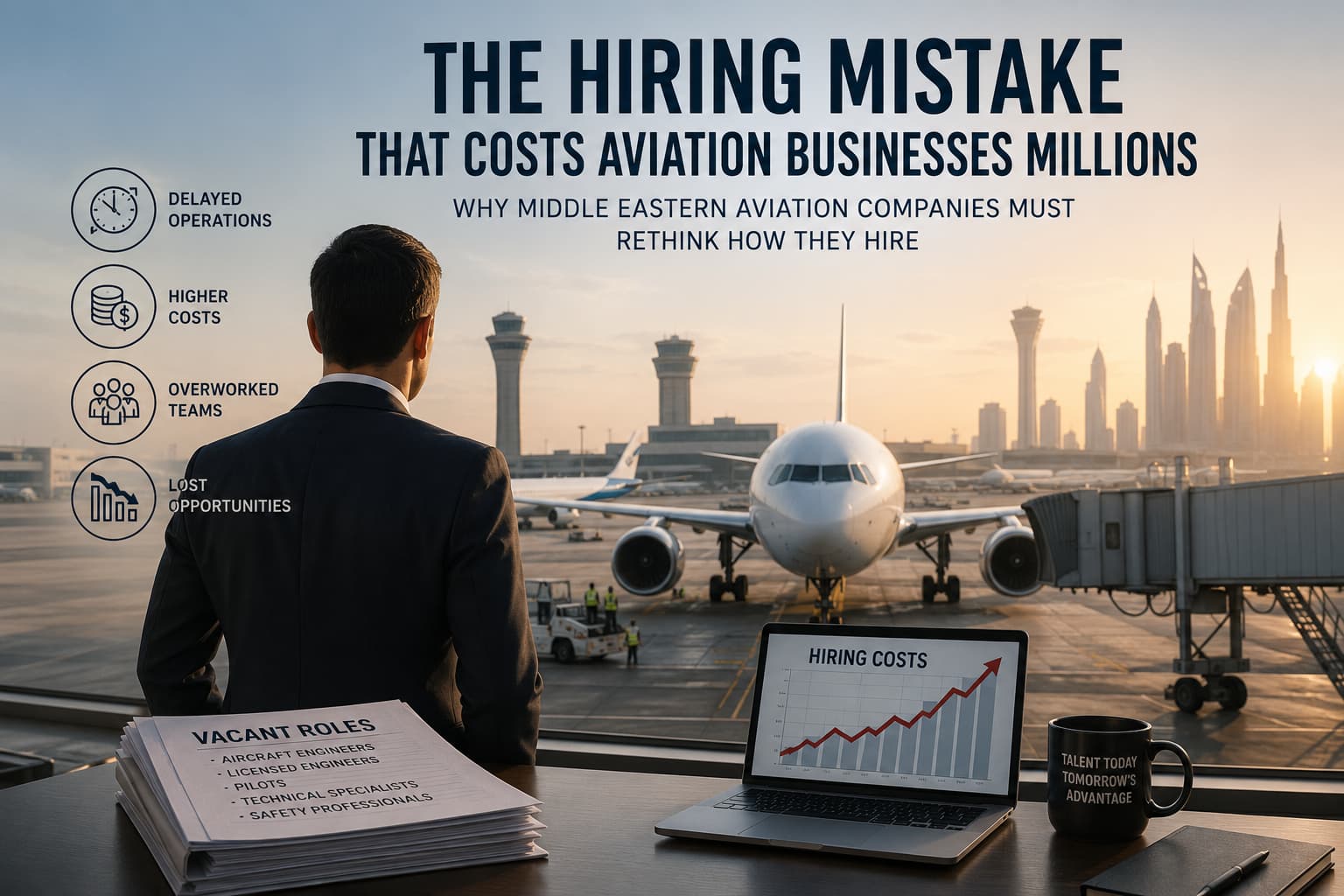
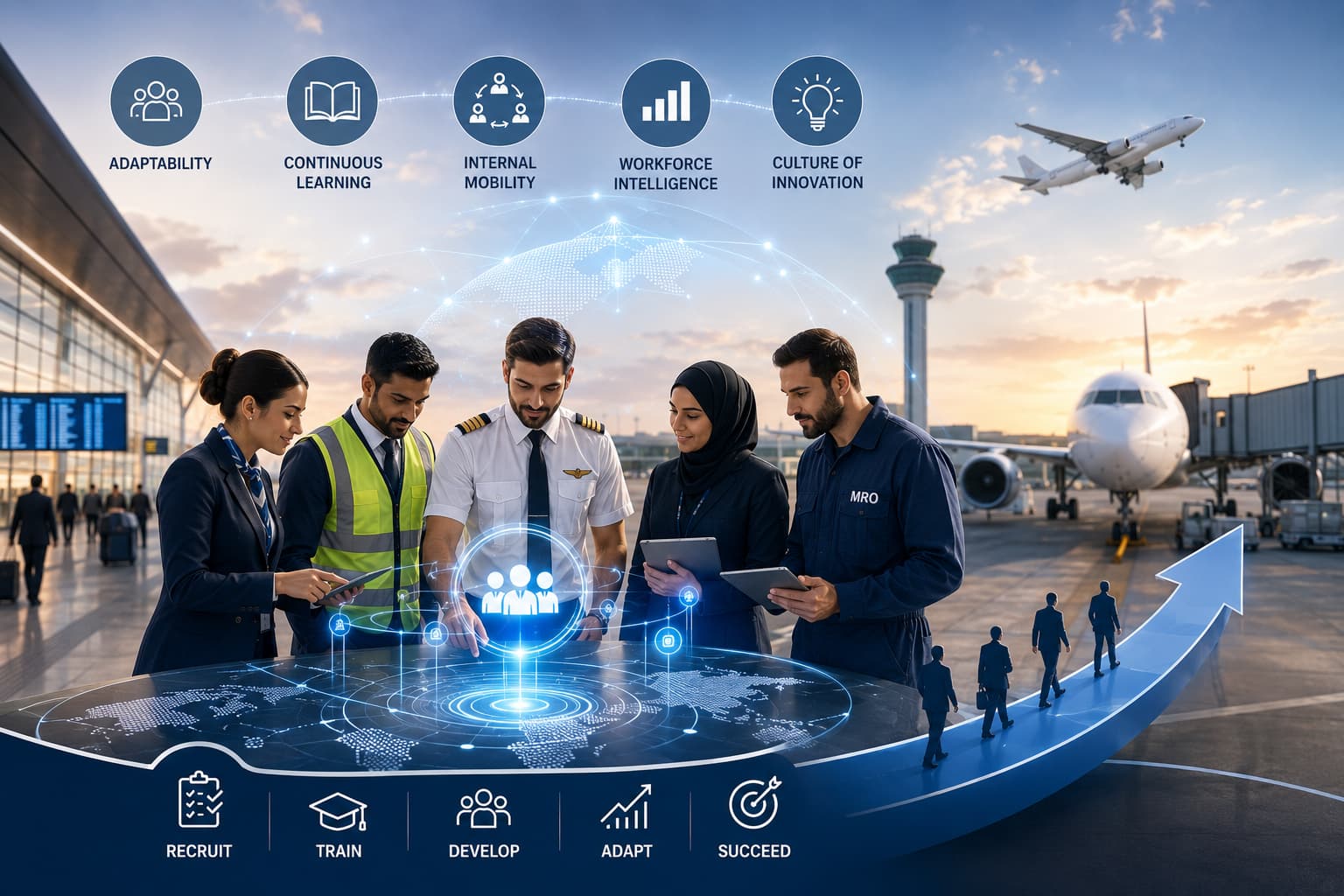
The UAE's aviation sector is experiencing remarkable growth. Airlines are increasing their fleets, airports are expanding their capacity, MRO facilities are scaling up their operations, and business aviation is seeing consistent demand.
While expansion is usually measured by new aircraft, routes, and infrastructure, one important aspect is often ignored: having the right skills within the workforce.
Hiring more people doesn't automatically solve workforce challenges. Aviation businesses also need a clear skills strategy to ensure that employees can meet the demands of a changing industry — a complement to building talent pipelines before expansion begins.
Why Skills Matter More Than Headcount
Hiring more people doesn't automatically solve workforce challenges. The real question is: does your workforce have the abilities needed to support future operations?
A strong skills strategy helps organizations:
- Prepare for new technologies
- Reduce operational disruptions
- Improve workforce agility
- Strengthen internal mobility
- Support business continuity
- Build long-term competitiveness
Expansion succeeds when organizations grow both their workforce and their workforce capabilities.
Why Aviation Businesses Need to Think Beyond Recruitment
Today's aviation environment is changing quickly. Key drivers include digital transformation across airline and airport operations, greater use of AI and automation, new regulatory and compliance requirements, a growing focus on sustainability, increasing passenger expectations, and expansion into new markets and destinations.
These changes require employees who can continuously develop new skills, not just perform existing roles — the same dynamic behind the shift toward skills-based hiring over job titles across UAE aviation.
Five Ways to Build a Skills Strategy for Aviation Growth
1. Identify Future Critical Skills
Every expansion plan should start with understanding the skills the business will require over the next three to five years. Consider areas such as digital operations, data analysis, safety and compliance, leadership, operational planning, customer experience, and sustainability knowledge. Knowing future requirements allows organizations to prepare well before demand increases.
2. Conduct a Skills Gap Assessment
Before recruiting externally, understand the capabilities that already exist within your organization. A skills assessment helps identify existing expertise, critical gaps, high-potential employees, upskilling opportunities, and succession planning priorities. This creates a more efficient and targeted workforce strategy.
3. Invest in Continuous Upskilling
As aviation evolves, employee development should become an ongoing business priority. Focus on technical training, leadership programs, digital literacy, regulatory updates, and cross-functional learning. Continuous learning enables organizations to adapt without relying solely on external hiring.
Upskilling existing employees is often faster, more cost-effective, and more sustainable than constantly recruiting new talent.
4. Align Skills Development With Business Growth
Training initiatives should directly support operational objectives. Examples include preparing teams before fleet induction, developing leaders for new operational bases, cross-training employees for expanding services, and building digital capabilities ahead of technology implementation. Aligning learning with business goals improves workforce readiness.
5. Measure Skills as a Business Asset
Many organizations measure headcount but overlook workforce capability. Useful metrics include critical skill availability, internal promotion rates, training completion, skills readiness, and workforce versatility. These insights help businesses make better workforce decisions — the same workforce-intelligence approach behind building an adaptable aviation workforce.
Common Mistakes Aviation Companies Make
Many organizations still recruit before identifying future skill requirements, focus only on immediate operational needs, underinvest in employee development, treat learning as an HR initiative rather than a business strategy, and lack visibility into workforce capabilities. These challenges can slow expansion and increase long-term recruitment costs.
How Aviation Indeed Helps Aviation Businesses Build Future-Ready Teams
At Aviation Indeed, we support airlines, airports, MROs, business aviation operators, and ground handling companies with workforce solutions designed for long-term growth.
Our services include aviation recruitment, talent mapping, Recruit, Train & Deploy, workforce intelligence, Managed HR Services, Recruitment Process Outsourcing (RPO), campus partnerships, and background verification.
By combining recruitment expertise with workforce planning and skills-focused strategies, we help organizations prepare for expansion with confidence. Learn more about our 20+ years of aviation recruitment expertise.
Key Takeaways
- Expansion requires the right skills, not just additional headcount
- Skills gap assessments improve workforce planning
- Continuous learning supports long-term business growth
- Aligning skills development with expansion plans reduces operational risk
- Organizations with strong skills strategies are better prepared for the future of aviation
Final Thoughts
Aircraft, airports, and infrastructure are essential for aviation growth, but they are only part of the equation. Behind every successful expansion is a workforce equipped with the skills to adapt, innovate, and deliver operational excellence.
As the UAE's aviation industry continues to evolve, businesses that invest in skills alongside recruitment will be better positioned to scale efficiently and remain competitive. At Aviation Indeed, we help aviation organizations build future-ready workforces through specialized recruitment, workforce intelligence, and talent solutions that align people, skills, and business growth.