The Middle East has emerged as one of the world's fastest-growing aviation markets.
With ambitious fleet growth, new airport projects, rising passenger numbers, and expanding cargo operations, the region is setting new global standards. Despite significant investments in planes, infrastructure, and technology, many companies still make a costly mistake that quietly reduces their profits: hiring only when there's an opening.
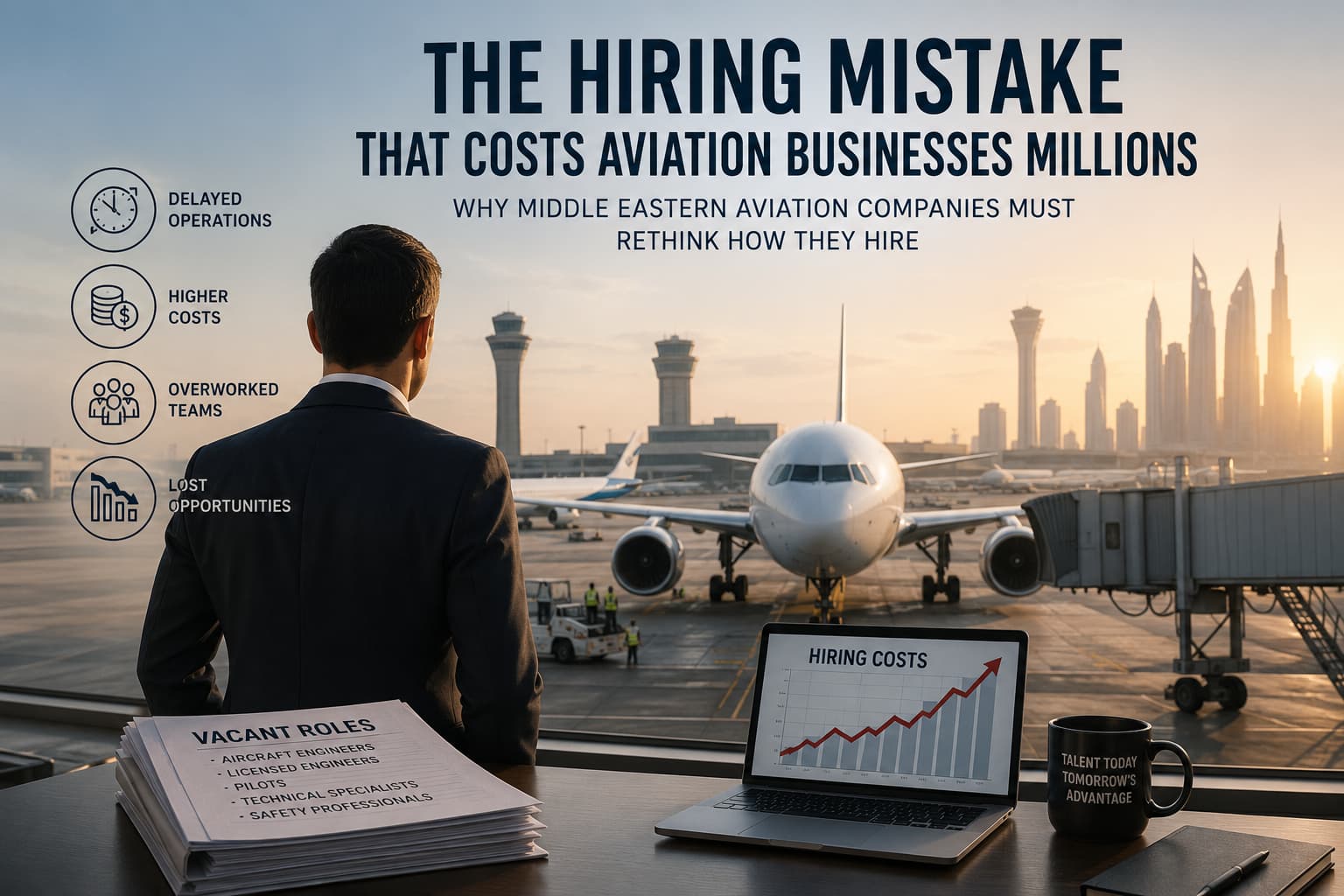
For aviation businesses, recruitment is no longer just an HR task. It has become a strategic business decision. Companies that treat talent acquisition as something done only when needed often face operational disruptions, delayed projects, higher labor costs, and lost revenue chances. The financial impact goes beyond just paying recruitment fees.
The Real Cost of Delaying Talent Acquisition
A pilot leaves the company. A maintenance engineer accepts a job elsewhere. An expansion project is approved. A new aircraft joins the fleet. Suddenly, the need for recruitment becomes urgent.
Unfortunately, aviation doesn't work the same way as other industries. Highly skilled professionals cannot be hired quickly. When a company starts searching only after a position is vacant, they often face:
- Longer hiring processes
- Higher salary expectations
- Increased overtime costs
- Reduced operational efficiency
- Delayed aircraft availability
- Increased reliance on expensive contractors
Each vacant technical position affects the whole organization. One missing licensed engineer can disrupt maintenance schedules. One shortage of pilots can limit aircraft usage. One vacant planning position can hold up an entire expansion plan. The cost builds up quickly.
Why This Problem Is More Pronounced in the Middle East
The Middle East has become one of the most competitive aviation talent markets worldwide. Major airlines continue to expand rapidly, while airports, MRO facilities, business aviation operators, and aerospace organizations are all vying for the same limited number of experienced professionals.
At the same time, several trends are increasing the pressure to hire: rapid fleet expansion in Gulf carriers, growing cargo operations, new airport developments, growth in MRO services, rising demand in business aviation, and increasing retirements of experienced aviation professionals.
The demand is growing faster than the available talent. As a result, skilled aviation professionals often receive multiple offers at the same time. Companies that start recruitment after a vacancy appears often find that the best candidates have already accepted other positions — a pattern closely tied to why hiring speed has become a competitive advantage in aviation.
The Hidden Costs Most Companies Don't Measure
Many organizations only account for recruitment agency fees or advertising costs. The real financial impact is much bigger.
Operational Delays
Aircraft waiting for qualified engineers cannot generate revenue. Delayed hiring can directly reduce operational capacity.
Overtime Expenses
Existing employees often work extra shifts to cover staffing shortages. This raises payroll costs and can lead to employee burnout and fatigue.
Project Delays
Expansion projects often depend on having the right people at the right time. Without them, project deadlines get pushed back.
Loss of Competitive Advantage
When competitors secure top talent first, they improve their operations and weaken yours.
Higher Employee Turnover
Overworked teams face higher stress, leading to more resignations and more recruitment challenges. The hiring problem becomes a cycle that keeps repeating.
Why Traditional Recruitment Doesn't Work Anymore
Putting up a job post and waiting for applications was common in the past. Today's aviation professionals behave differently.
The most experienced pilots, engineers, technical specialists, and aviation leaders are often not actively looking for new jobs. They are already employed. These professionals are more likely to respond to trusted industry connections, specialized aviation recruiters, or confidential career moves than to public job postings.
This is especially true in the Middle East, where referrals and professional networks play a big role. Companies that depend only on job boards limit themselves to a small part of the available talent market.
Top Aviation Companies Hire Before They Need To
Leading aviation organizations are moving from reactive hiring to proactive talent acquisition. Instead of waiting until there's a vacancy, they consistently build relationships with aviation professionals. This includes keeping talent pipelines active, planning future workforce needs, engaging with passive candidates, building their employer brand within the aviation industry, and identifying key roles before expansion projects start.
When hiring needs arise, these companies already have qualified candidates available. Recruitment becomes faster and less expensive — the same logic behind treating talent risk as seriously as operational risk.
Talent Pipelines Are a Competitive Advantage
The strongest aviation businesses understand that talent pipelines are just as important as operational planning.
Think about how airlines prepare for fleet expansion. Aircraft orders are placed years in advance. Maintenance schedules are carefully planned. Route networks are developed strategically. Yet hiring often starts only after there's a need. This mismatch creates unnecessary risk.
Organizations that consistently invest in talent pipelines reduce hiring time, improve workforce quality, and avoid costly disruptions — the approach we unpacked in why UAE aviation companies must build talent pipelines before expansion.
Why Industry-Specific Recruitment Matters
Aviation recruitment requires expertise that general recruitment agencies may lack. Understanding licensing, regulatory standards, operational experience, aircraft types, maintenance certifications, and regional compliance is essential.
Hiring an experienced aircraft maintenance engineer is different from recruiting for a general engineering role. This also applies to pilots, CAMO specialists, safety professionals, flight operations managers, and aviation executives. Industry knowledge helps shorten hiring timelines because recruiters know where qualified professionals are and how to connect with them effectively — a point we've made before on why aviation recruitment requires industry-specific expertise.
Recruitment Should Support Business Growth, Not Just Fill Vacancies
For growing aviation businesses, recruitment should align with long-term goals. Leaders should ask questions like: What critical roles will we need in six months? Where might future shortages occur? Which skills are becoming harder to source? How can we reduce our reliance on emergency hiring?
The answers shape a more resilient workforce strategy.
The Future Belongs to Companies That Plan Ahead
The Middle East's aviation sector will keep growing over the coming years. Infrastructure investments remain strong. Fleet growth continues. Passenger demand is increasing. Competition for skilled aviation professionals will get even more intense.
Companies that keep hiring reactively will likely face longer hiring cycles, higher costs, and greater operational challenges. Those that invest in strategic talent acquisition — with support from partners like Aviation Indeed — will be better prepared for the future.