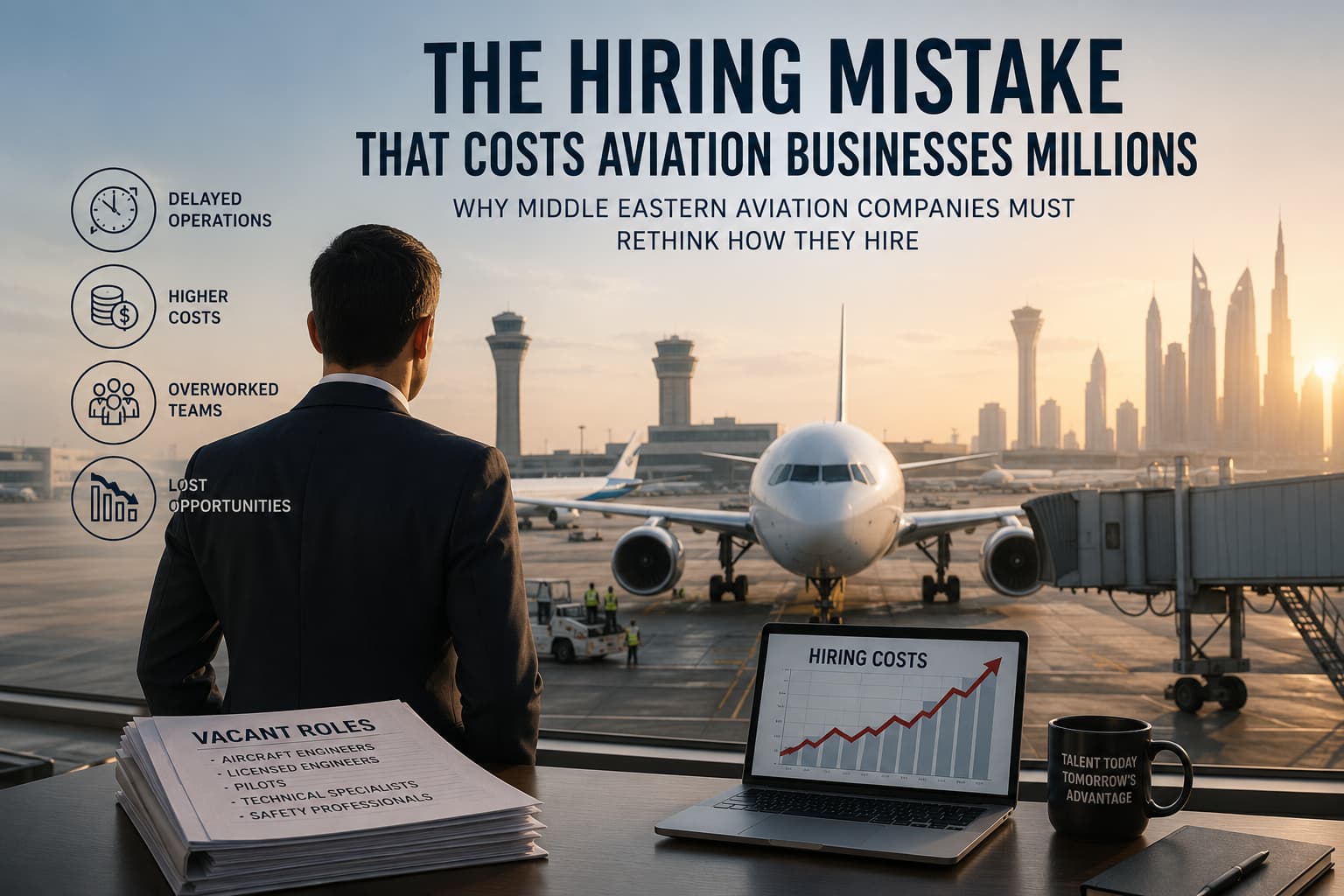
A maintenance plan can be ready. The facility can be prepared. The aircraft may be waiting.
But if the right people are not in place, the operation can still fall behind.
For airlines, MROs, OEMs, defence support companies and ground handling organisations, workforce gaps can become operational pressure. And when a hiring need crosses borders, filling it takes more than posting a vacancy and waiting for applications.
It takes a clear understanding of the work, the people needed to do it, the markets where they may be found, and the steps between selection and joining.
Aviation Hiring Is Tied to Operational Readiness
In aviation, hiring plans are connected to real operational requirements: maintenance capacity, fleet plans, new routes, project schedules, service commitments and workforce ramp-ups.
A missing skill set can put pressure on the people already in place. A team may need to cover additional shifts, keep a new operation on track or support a project while the hiring process continues. The impact depends on the role and the operation, but the underlying challenge is familiar: the workforce plan and the operational plan need to move together.
That is why cross-country hiring should be considered early, not only when a vacancy becomes urgent.
The Challenge Is Bigger Than Finding Candidates Willing to Move
Hiring across countries adds several questions to the process.
The same job title may mean different things in different organisations. A maintenance role may require specific aircraft experience, qualifications or authorisations. A ground handling position may depend on local procedures, shift patterns, language needs or site access.
Employers also need to understand which requirements apply in the destination market and which checks are appropriate for the role. Qualifications and experience should be assessed against the employer's needs and relevant local requirements. They should not be assumed to transfer automatically between jurisdictions.
Candidate mobility matters, too. Someone may be interested in an opportunity but unable to meet its timeline or relocation requirements. Those details are better discussed early, when the candidate and employer can make informed decisions.
Start With the Operation, Not Just the Vacancy
Before sourcing begins, HR, Procurement and Operations can align around a simple set of questions:
- What work needs to be done, and at which location?
- Which experience and qualifications are essential?
- What requirements or checks need to be considered for the role and destination?
- When does the team need the person to join?
- What steps could affect the timeline?
- Who will coordinate each stage with the candidate and internal teams?
A shared brief helps everyone assess candidates against the same needs. It also gives procurement a clearer basis for evaluating a hiring partner and helps operations see how workforce delivery connects to the schedule.
How Aviation Indeed Supports Hiring Across Markets
Cross-country hiring looks different for each organisation. The roles, locations and workforce model depend on the operational need.
For an airline and MRO in Saudi Arabia, Aviation Indeed has helped source aircraft maintenance engineers by drawing on talent from around nine countries. A search across several markets can widen access to relevant AME experience when hiring needs cannot be met through a single talent pool, a challenge closely related to the global CAT A engineer shortage.
For Indian companies establishing MRO operations or contact centres, the hiring need may involve building teams for a new capability, location or service model. That requires a workforce plan connected to the roles needed, the sequence of the ramp-up and the requirements of the operation.
In Europe, airlines may need to hire for changing operational requirements. In the Middle East, ground handling organisations may need blue-collar staff across frontline roles. Aviation Indeed also supports hiring needs in markets such as Canada and Hong Kong.
These examples involve different roles and locations, but the aim is consistent: connect the hiring requirement with relevant talent markets and the practical steps needed to bring people into the operation.
Plan for Joining, Not Only the Shortlist
A shortlist is one stage of hiring. The work continues through interviews, selection, checks, notice periods, documentation, travel where relevant, onboarding and local induction.
When these steps are not planned, a candidate can be selected while key questions remain unresolved. A joining plan helps identify dependencies, owners and likely timing earlier. It also helps candidates understand what to expect as they consider an opportunity in another country.
No hiring process can remove every delay or guarantee that every selected candidate will join. Clear responsibilities, realistic timelines and regular communication can help teams identify issues sooner and manage the process with fewer last-minute surprises.
Give the Workforce Plan a Global View
Global hiring starts with understanding where the need is, and where relevant talent may be available. A wider search can bring more options into view, but it still needs to account for the role, location, employer requirements and candidate readiness.
For HR leaders, this can support workforce planning across countries. For procurement teams, it can make delivery expectations easier to assess. For operations heads, it connects staffing needs to the work the business is preparing to deliver.
Aviation Indeed supports aviation and aerospace organisations with cross-country hiring and wider workforce solutions. The right approach depends on the roles, markets and operational timelines involved.
Before the Next Expansion, Ask One Question
The next maintenance expansion, new route, MRO setup or support contract may depend on having the right people ready at the right time.
So before the hiring need becomes urgent, ask: does our workforce plan cover the locations, skills and joining timelines this operation will require?
Planning aviation hiring across markets? Share your roles, locations and timeline with Aviation Indeed to discuss an approach that fits your workforce plan.