In aviation, the operation never waits for the paperwork to catch up. People systems need to be ready when the next shift begins.
A flight departs on time because many details line up.
The aircraft is serviceable. The crew is ready. The ground team is in position. The required checks are complete. Behind those visible moments is another system at work: people being hired, onboarded, scheduled, paid, supported and prepared to do their jobs.
When that system works well, employees can focus on the operation. When it breaks down, small administrative problems can ripple across shifts, stations and teams.
Aviation HR is more than a set of forms. It is the people infrastructure that helps airlines, airports, maintenance, repair and overhaul providers (MROs), ground handlers and aviation service companies keep their workforce organised.
Why Aviation HR Has Its Own Demands
Aviation organisations work across locations, teams and operating hours. A company may employ aircraft technicians at one base, ground staff at several airports, and corporate teams in multiple jurisdictions. Some roles are safety-critical or regulated. Many involve rotating shifts, changing operational needs and specialist qualifications.
That creates a people-management workload that can include:
- Hiring and employee records
- Contracts, onboarding and offboarding
- Payroll coordination and accurate employee data
- Training and qualification records
- Policies and employment processes
- Performance conversations and manager support
- Workforce planning across bases, shifts or projects
- Compliance with applicable employment requirements
The details vary by country and employer. Payroll rules in one location may differ from those in another. A role may require checks or credentials that do not apply to a different position. A process that works for a small office team may not suit an airport operation that runs around the clock.
The practical question is simple: can the people process support the operation at the speed and scale it needs?
The Employee Journey Is an Operational Journey
An employee's experience begins before their first shift and continues well beyond the hiring decision. For aviation employers, each stage needs ownership and clear communication.
1. Workforce Planning
What needs to happen: Define roles, locations, shifts, reporting lines and required skills.
What can go wrong without a clear process: Roles stay open, teams become overstretched or hiring starts too late.
2. Recruitment and Selection
What needs to happen: Communicate requirements, assess candidates consistently and document decisions.
What can go wrong without a clear process: Candidates misunderstand the role or key requirements are missed.
3. Pre-Employment and Onboarding
What needs to happen: Complete required checks, contracts, records, inductions and system access.
What can go wrong without a clear process: New starters arrive without the information or access they need.
4. Training and Readiness
What needs to happen: Track role-specific learning, qualifications and renewals where applicable.
What can go wrong without a clear process: Managers cannot easily confirm who has completed required training.
5. Payroll and Employee Records
What needs to happen: Maintain accurate personal, pay and employment information.
What can go wrong without a clear process: Errors create avoidable rework and frustration for employees.
6. Performance and Development
What needs to happen: Give feedback, recognise strengths and identify skills or support needs.
What can go wrong without a clear process: Employees cannot see how to improve or progress.
7. Employee Support
What needs to happen: Provide a clear route for questions and workplace concerns.
What can go wrong without a clear process: Small issues remain unresolved and trust can erode.
8. Offboarding and Handover
What needs to happen: Complete final records, access changes and knowledge transfer.
What can go wrong without a clear process: Important information or equipment is not returned or handed over.
A consistent process does not mean treating every employee identically. It means creating dependable foundations while adapting to the role, location and rules that apply.
What Are Managed Aviation HR Services?
Managed HR services provide employers with outside support for agreed human resources tasks. The scope can differ: one company may need help with onboarding and employee records; another may want support across payroll administration, compliance processes, performance management and the wider employee lifecycle.
For aviation companies, the potential value is in having a more organised way to manage people administration while operational leaders focus on safe, reliable service.
Managed HR is not a substitute for the employer's responsibilities. The company still needs to set policy, make employment decisions, maintain appropriate oversight and meet legal and regulatory obligations. A provider can support the agreed process, but responsibilities should be clearly defined in the service arrangement.
How Aviation Indeed Describes Its HR Services
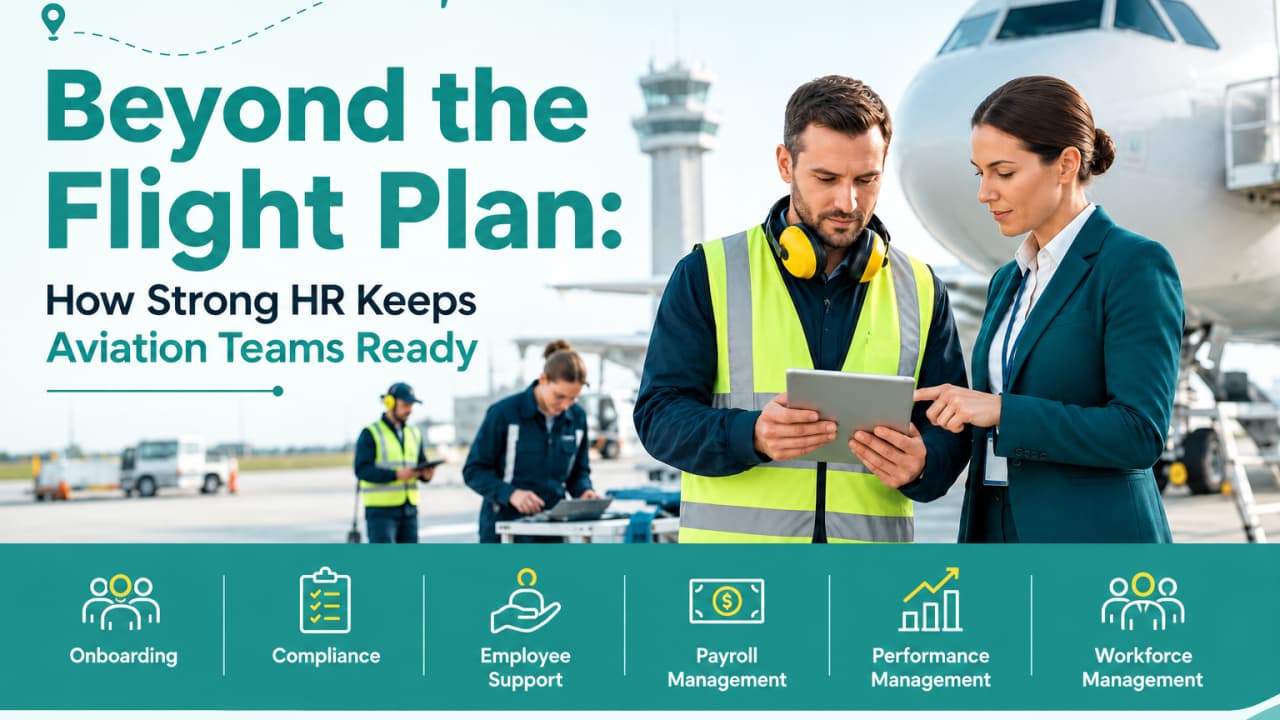
Aviation Indeed's business HR services page describes managed HR services for airlines and MROs, including payroll, onboarding, compliance, performance management and end-to-end employee lifecycle support.
Its broader business services page also presents managed HR as part of a wider set of aviation workforce services. The company describes its offering as tailored to aviation employers, including airlines, MROs and airports. These are the company's own descriptions of its services; employers should confirm the scope, locations, responsibilities and deliverables that apply to their specific engagement.
The larger idea is useful beyond any one provider: aviation employers can look for HR support that understands their operating environment and can connect people administration with the needs of the workforce.
A Step-by-Step Approach to Managed HR for Aviation
1. Identify the Pressure Points
Start by mapping what is slowing the organisation down. Is it onboarding delays? Payroll corrections? Inconsistent employee records across stations? Difficulty tracking qualifications? Manager workload? Unclear ownership between internal teams and external providers?
Use examples from employees and managers, not assumptions. A short diagnosis gives the project a practical focus.
2. Map Roles, Locations and Requirements
List the employee groups included in the scope: for example, maintenance, airport operations, ground handling, cargo or corporate roles. Note which locations are involved and what employment, training or documentation requirements apply.
This step helps separate common processes from location- or role-specific steps.
3. Decide What Should Be Managed Internally and Externally
Some employers may want an external partner to coordinate routine administration while retaining strategic HR, employee relations and final decision-making in-house. Others may need support across more of the employee lifecycle.
Set the boundaries clearly. Document who handles approvals, employee questions, payroll inputs, record keeping, escalations and reporting.
4. Define Service Expectations
Agree how requests will be handled, what information each side must provide, how urgent issues are escalated and which measures will show whether the service is working.
Useful measures might include onboarding completion, payroll correction rates, response times, record completeness and employee feedback. Targets should be realistic and matched to the agreed scope.
5. Prepare Data and Process Handovers
Before changing providers or introducing a new process, organise employee records, templates, policy documents, payroll inputs and open cases. Confirm access permissions and privacy controls. Decide what information is necessary to share and who may access it.
Clear handovers reduce confusion for employees and managers during the transition.
6. Pilot With One Team or Location
A focused pilot can reveal gaps before a process is used across the organisation. Choose a team or site with clear boundaries. Gather feedback from employees, supervisors and HR staff, then adjust the process where needed.
7. Communicate the Change to Employees
Employees should know where to ask questions, what information is changing, who can access their records and how to raise a concern. Communication should be direct and practical, especially for employees working shifts or away from a central office.
8. Review Performance and Improve
Schedule regular reviews. Look at service measures, employee questions, manager feedback and operational issues. If the process is creating extra steps or confusion, refine it.
The goal is not to outsource a process and forget it. The goal is to make the employee experience and the operation work better together.
Choosing an Aviation HR Partner
Before engaging a managed HR provider, employers can ask:
- Which HR activities are included, and which remain with the employer?
- Which countries, locations and employee groups can the provider support?
- How are payroll data, employee records and personal information protected?
- How are employment-law changes monitored and communicated?
- What is the process for employee questions, grievances and urgent issues?
- What reporting is provided, and how often?
- How are service quality and employee experience measured?
- What aviation-specific experience does the team bring?
- How will a transition be managed without disrupting employees or operations?
The strongest partner is not necessarily the one offering the broadest list of services. It is the one whose responsibilities, expertise, safeguards and working style fit the employer's actual needs.
Common Questions About Aviation HR Services
What do aviation HR services include?
Depending on the provider and agreement, they may include onboarding, employee records, payroll coordination, compliance processes, performance management, employee support and other employee lifecycle tasks. Employers should confirm the exact scope and accountability for each service.
Why might an airline or MRO use managed HR services?
An airline or MRO may use managed HR support to organise people administration, support multiple teams or locations, improve process consistency, or give internal leaders more time for operational priorities. Whether it is useful depends on the company's needs, costs, existing capability and the provider's fit.
Can HR services support airport and ground operations teams?
They can, depending on the provider's service scope and local coverage. Airport and ground operations may involve shift-based teams, multiple work sites and role-specific onboarding, so the employer should check that those needs are included in the proposed process.
Does outsourcing HR transfer the employer's legal responsibilities?
Not automatically. Responsibility depends on the applicable law, employment arrangement and contract. Employers should obtain appropriate local advice and clearly document which tasks a provider performs and which responsibilities remain with the company.
What should an aviation employer check before choosing an HR provider?
Check the provider's aviation experience, covered locations, service scope, data handling, escalation process, reporting, local expertise and transition plan. Ask how employee questions will be handled and how service quality will be reviewed.
The Operation Is Built by People
Aircraft and schedules matter. So do the people who prepare, maintain and support them.
When HR processes are clear, employees know what is expected, managers know where to turn, and operational teams can spend less time chasing information. That does not happen through software or outsourcing alone. It takes good design, clear responsibilities, communication and regular attention to the employee experience.
For aviation companies reviewing their people operations, managed HR services are one possible way to build that foundation. Providers such as Aviation Indeed describe support across payroll, onboarding, compliance, performance management and employee lifecycle processes. The right next step is to match the service scope to the real needs of the workforce, and make sure the process works for the people who rely on it every day.